

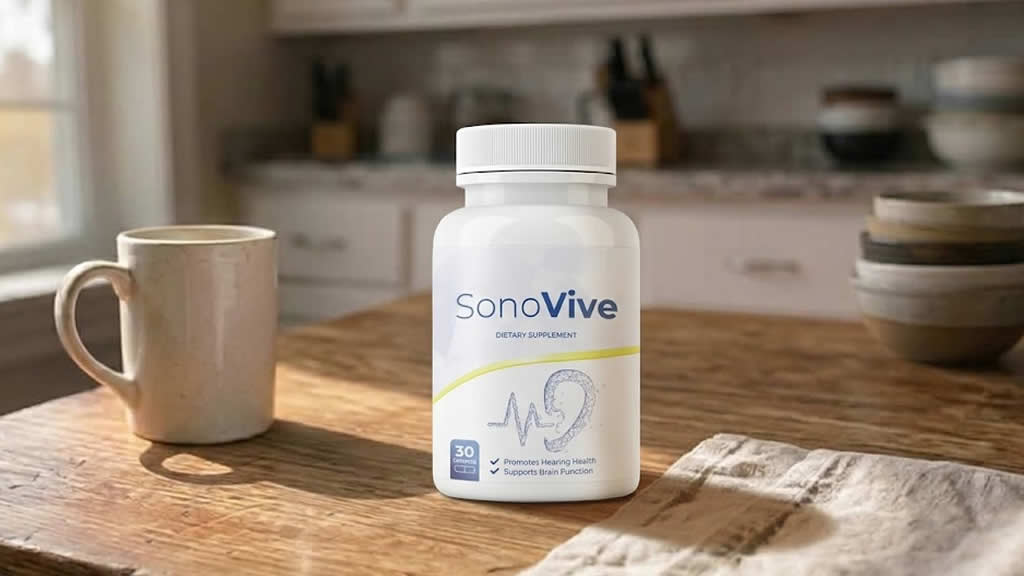
If you’ve been struggling with a constant ringing in your ears, asking people to repeat themselves, or feeling mentally foggy after conversations, you’re not alone — and you may have already come across SonoVive. In this updated SonoVive review for 2026, we go beyond the marketing claims. We analyzed the ingredients against published research, compared it with top competitors, and compiled real user feedback — both positive and negative — so you can make an informed decision.
Bottom line up front: SonoVive is a legitimate dietary supplement with a nootropic-based formula that addresses both auditory nerve health and cognitive function. It is not a cure for structural hearing loss, but the evidence for its core ingredients — particularly Ginkgo Biloba and Bacopa Monnieri — is promising for age-related auditory decline and tinnitus. Read the full breakdown below.
What is SonoVive?
SonoVive is an oral dietary supplement formulated to support hearing health and cognitive function simultaneously. It was developed by Sam Olsen, a retired medical chemist, and is manufactured in the United States in an FDA-registered, GMP-certified facility.
Unlike hearing aids — which amplify sound mechanically — SonoVive works from the inside by targeting the neural connection between the ear and the brain. The formula combines plant-based nootropics (brain-boosting compounds) with circulation-enhancing herbs to nourish the auditory nerve, protect delicate inner-ear hair cells, and improve the brain’s ability to process sound signals.
Each bottle contains 60 capsules (a 30-day supply at the recommended dose of 2 capsules per day).
Does SonoVive really work?
This is the question most people have — and the honest answer is: it depends on the cause of your hearing issue.
SonoVive is most likely to benefit people experiencing:
- Age-related auditory decline (presbycusis)
- Tinnitus caused by inflammation or poor circulation to the inner ear
- Mental fog and difficulty processing conversations in noisy environments
- Hearing fatigue linked to oxidative stress or stress-related nerve tension
SonoVive is unlikely to help with:
- Profound structural deafness or severed auditory nerves
- Hearing loss caused by physical damage to the eardrum
- Conditions requiring surgery or medical intervention
There are no published randomized controlled trials (RCTs) specifically on SonoVive as a product. However, several of its individual ingredients have peer-reviewed support for improving circulation, reducing neural inflammation, and supporting auditory function — which we cover in detail in the next section.
Realistic expectations: Most users who respond to SonoVive report noticeable changes after 4–8 weeks of consistent use. The manufacturer recommends 3 to 6 months for full results.
SonoVive Ingredients: A Science-Backed Analysis
Here is what is inside each capsule and what the research actually says about each compound:
1. Ginkgo Biloba
One of the most studied herbal compounds for auditory health. Ginkgo works primarily as a vasodilator — it widens micro-blood vessels and improves circulation to the cochlea (inner ear) and the cerebral cortex. A 2013 meta-analysis published in the Journal of Laryngology & Otology found that Ginkgo biloba extract EGb 761 showed statistically significant improvements in tinnitus severity. Important note: Ginkgo can interact with blood thinners (warfarin, aspirin). Consult your doctor if you are on anticoagulant medication.
2. Bacopa Monnieri
A well-documented nootropic herb used in Ayurvedic medicine for over 3,000 years. Bacopa supports neuroplasticity — the brain’s ability to form and repair neural connections — which directly impacts how efficiently the brain processes incoming sound signals. Clinical trials have shown it improves memory formation and reduces anxiety, both of which play a role in tinnitus perception. Effective doses in studies range from 300–450 mg/day.
3. St. John’s Wort (Hypericum perforatum)
Primarily known as a natural mood stabilizer, St. John’s Wort helps calm the nervous system. This matters for tinnitus sufferers because chronic stress and anxiety significantly amplify tinnitus perception. By reducing baseline nervous system tension, it lowers the emotional distress associated with constant ear ringing. Note: St. John’s Wort affects liver enzymes (CYP450) and can reduce the effectiveness of certain medications including birth control pills and antidepressants.
4. Vinpocetine
Extracted from the periwinkle plant, Vinpocetine is a powerful neuroprotective agent. It crosses the blood-brain barrier, protects neurons from oxidative damage, and improves cerebral blood flow. Some clinical studies have explored its use for age-related cognitive decline. It is classified as a dietary supplement in the US but as a prescription drug in several European countries, which speaks to its pharmacological potency.
5. Huperzine A
Derived from a Chinese club moss, Huperzine A inhibits acetylcholinesterase — the enzyme that breaks down acetylcholine, a key neurotransmitter involved in attention and auditory processing. By preserving acetylcholine levels, it sharpens focus and supports the brain’s ability to decode sound signals. It is also being studied for its potential in neurodegenerative conditions.
Transparency note: The manufacturer does not publish the exact milligram dosage for each ingredient. This makes it difficult to compare doses against the amounts used in clinical studies. We recommend contacting customer support for this information before purchasing.
SonoVive Side Effects: Who Should Be Careful
SonoVive is generally well-tolerated due to its plant-based formula. That said, several ingredients carry interaction risks that you should be aware of:
- Ginkgo Biloba — can increase bleeding risk; avoid if taking warfarin, aspirin, or NSAIDs regularly
- St. John’s Wort — interacts with antidepressants (SSRIs), birth control pills, and HIV medications. Can cause serotonin syndrome if combined with certain drugs
- Vinpocetine — may cause mild nausea, headache, or dizziness in some users, especially on an empty stomach
- Huperzine A — should not be combined with Alzheimer’s medications (cholinesterase inhibitors like donepezil)
Who should NOT take SonoVive without medical supervision:
- People on blood thinners or anticoagulant therapy
- People taking antidepressants (especially SSRIs or MAOIs)
- Pregnant or breastfeeding women
- Anyone scheduled for surgery within 2 weeks
- Individuals under 18 years of age
If you have any pre-existing condition or take prescription medications, consult your physician before starting SonoVive.
SonoVive vs ZenCortex vs Cortexi: Which Is Best?
The hearing supplement market in 2026 is crowded. Here is how SonoVive compares to the two most popular alternatives:
| Feature | SonoVive | ZenCortex | Cortexi |
|---|---|---|---|
| Formula type | Capsule | Liquid drops | Liquid drops |
| Primary focus | Ear + Brain (dual) | Ear + Brain (dual) | Brain / nootropic |
| Key nootropics | Bacopa, Huperzine A | Bacopa, Astragalus | Grape seed, Green tea |
| Vascular support | Strong (Ginkgo + Vinpocetine) | Moderate | Moderate |
| Price (1 bottle) | $69 | $69 | $69 |
| Money-back guarantee | 60 days | 60 days | 60 days |
| Best for | Tinnitus + brain fog | General auditory support | Mental clarity focus |
| Our rating | 4.6 / 5 | 4.4 / 5 | 4.2 / 5 |
Our verdict: SonoVive edges out ZenCortex specifically for users dealing with both tinnitus and cognitive decline simultaneously, thanks to its combination of Vinpocetine and Huperzine A. If your main concern is general ear health without significant brain fog, ZenCortex is an equally valid option — and we’ve reviewed it in detail here. Cortexi leans more toward a general nootropic and is less targeted for auditory support specifically.
Real SonoVive User Reviews: What Customers Are Actually Saying
We reviewed user feedback from multiple sources. Here is an honest summary:
Positive feedback patterns
- Reduced tinnitus intensity (most common benefit reported after 4–6 weeks)
- Improved ability to follow conversations in noisy environments
- Clearer thinking and reduced mental fatigue
- Better sleep quality (likely linked to reduced nighttime tinnitus)
Negative feedback and complaints
- Results are slow — some users report no improvement before 6 weeks
- A minority report no effect at all, especially with severe or structural hearing loss
- Lack of ingredient dosage transparency is a recurring concern among informed buyers
- Some users experienced mild digestive discomfort in the first week (commonly linked to Vinpocetine on an empty stomach)
The overall sentiment is positive for people with mild-to-moderate age-related hearing decline. Users with clinically diagnosed profound hearing loss report less benefit, which aligns with the formula’s mechanism of action.
SonoVive Pros and Cons
Pros:
- Dual-action formula targets both hearing and cognitive health — rare in this category
- Strong vascular support via Ginkgo Biloba and Vinpocetine
- Non-GMO, stimulant-free, no habit-forming compounds
- Manufactured in FDA-registered, GMP-certified US facility
- 60-day money-back guarantee with no questions asked
- Free shipping on multi-bottle orders
Cons:
- Individual ingredient dosages are not disclosed on the label
- Results require consistent use over weeks — not a quick fix
- Not effective for structural or profound hearing loss
- Several ingredients interact with common medications (see side effects section)
- Only available through the official website — not on Amazon or pharmacies
SonoVive Pricing and Where to Buy
SonoVive is sold exclusively through the manufacturer’s official website. This is intentional — to prevent counterfeit products and ensure the refund policy remains valid. Do not purchase from Amazon, eBay, or third-party supplement stores, as these are not authorized resellers.
Current pricing (with free US shipping on all orders):
- 1 Bottle — 30-day supply: $69
- 3 Bottles — 90-day supply: $59 per bottle ($177 total)
- 6 Bottles — 180-day supply: $49 per bottle ($294 total)
Given that the manufacturer recommends 3–6 months for full results, the 3- or 6-bottle bundle offers the best value and ensures you don’t run out mid-cycle.
60-Day Money-Back Guarantee: If you don’t experience measurable improvement in hearing clarity, tinnitus reduction, or mental focus within 60 days, the manufacturer offers a full refund — no questions asked. Contact their support team by email to initiate the process.
Final Verdict: Is SonoVive Worth It in 2026?
After reviewing the ingredient science, competitive landscape, and user feedback, our assessment is that SonoVive is one of the more thoughtfully formulated hearing supplements currently available — specifically for people dealing with the combination of tinnitus, hearing fatigue, and cognitive decline.
It won’t restore hearing lost due to physical damage, and it is not a medical treatment. But for the large population of adults experiencing age-related auditory decline with a neurological or circulatory component, the formula’s ingredients have genuine scientific backing.
The 60-day guarantee makes the risk essentially zero. If you’ve been on the fence, the 3-bottle bundle is where the value-to-commitment ratio makes the most sense.
Our rating: 4.6 out of 5.
Frequently Asked Questions (FAQ)
Is SonoVive safe?
SonoVive is formulated with natural, plant-based ingredients and manufactured in an FDA-registered, GMP-certified facility in the USA. It is generally safe for healthy adults. However, several ingredients — particularly Ginkgo Biloba and St. John’s Wort — interact with common medications. Always consult a healthcare provider before starting any new supplement, especially if you take prescription drugs.
How long does it take for SonoVive to work?
Most users who respond to SonoVive report noticeable changes between weeks 4 and 8 of consistent daily use. The manufacturer recommends a minimum of 3 months for full results. This aligns with the biological timelines of nootropic compounds like Bacopa Monnieri, which builds up progressively in the system.
Is SonoVive a scam?
No. SonoVive is a legitimate dietary supplement with real, named ingredients, a verifiable manufacturer, and a functional refund policy. The main concerns from a skeptical standpoint are: (1) ingredient dosages are not disclosed, and (2) like all supplements, it lacks RCT-level evidence as a finished product. It is not a miracle cure, but it is not a scam either.
Can I take SonoVive with blood thinners?
No — not without medical supervision. Ginkgo Biloba has known blood-thinning effects and can potentiate the effects of warfarin, aspirin, and other anticoagulants, increasing bleeding risk. If you are on any blood-thinning medication, consult your doctor before using SonoVive.
Is SonoVive available on Amazon?
No. SonoVive is only sold through the official website. Products appearing on Amazon or eBay under this name are unauthorized third-party listings and are not covered by the 60-day refund guarantee. Purchasing from those sources also carries the risk of counterfeit products.
What if SonoVive doesn’t work for me?
The manufacturer offers a full 60-day money-back guarantee with no questions asked. If you don’t see measurable improvements in hearing clarity, tinnitus, or mental focus within 60 days, simply contact their customer support by email and request a refund. Keep in mind that returns must be initiated within the 60-day window from your purchase date.
Who should NOT take SonoVive?
The following groups should avoid SonoVive or consult a doctor first: people on anticoagulants or blood thinners; people taking SSRIs, MAOIs, or other antidepressants (St. John’s Wort interaction risk); pregnant or breastfeeding women; anyone under 18; people with scheduled surgeries within 2 weeks; and individuals taking Alzheimer’s medications such as donepezil (Huperzine A interaction).
How do I take SonoVive?
The recommended dose is 2 capsules per day, taken with a full glass of water, preferably with a meal to minimize the chance of digestive discomfort. Do not exceed the recommended dose. Store in a cool, dry place away from direct sunlight.
Does SonoVive work for severe hearing loss or deafness?
No. SonoVive is not designed for, and is unlikely to help with, profound structural hearing loss, severed auditory nerves, or physical damage to the eardrum. It works best for age-related auditory decline with a neurological or circulatory component, and for tinnitus associated with inflammation or stress. If you have medically diagnosed severe hearing loss, consult an audiologist.
How does SonoVive compare to ZenCortex?
Both are dual-action hearing and brain supplements at a similar price point. SonoVive’s formula has stronger vascular support (Vinpocetine + Ginkgo) and a more targeted tinnitus approach. ZenCortex uses a broader antioxidant blend and includes some unique ingredients like Astragalus. For tinnitus with brain fog, we lean toward SonoVive. For general auditory maintenance, both are solid options. Read our full ZenCortex review here.
Disclaimer: This article is for informational purposes only and does not constitute medical advice. SonoVive is a dietary supplement and is not intended to diagnose, treat, cure, or prevent any disease. Individual results may vary. Statements about this product have not been evaluated by the Food and Drug Administration. Always consult a qualified healthcare professional before starting any new supplement, particularly if you are taking prescription medications or have a pre-existing health condition. This page may contain affiliate links; we may receive a commission if you purchase through our links, at no additional cost to you.